The Astronomers
Copyright
Image(s): 640*480
 Jpeg Image (29 Ko) Jpeg Image (29 Ko) |
 Jpeg Image (30 Ko) Jpeg Image (30 Ko) |
 Jpeg Image (31 Ko) Jpeg Image (31 Ko) |
 Jpeg Image (22 Ko) Jpeg Image (22 Ko) |
 Jpeg Image (29 Ko) Jpeg Image (29 Ko) |
 Jpeg Image (28 Ko) Jpeg Image (28 Ko) |
- Blaine Baggett
- Don Goldsmith
- Producer: Jeff Kleizer
- Biography :
Jeff Kleiser attended Colgate University graduating in 1976
with a BA in Computer Graphics.
In New York City, Kleiser worked as a Scanimate animator at
Dolphin Productions,
a holographer at Laser Light Concepts, and as an Optical
Effects Editor at EFX,
Unlimited before co-founding Digital Effects, Inc. Credits
as animation director at
Digital Effects and EFX,
Unlimited include "TRON", "The Blue Lagoon", "Still of the Night",
"Summer Lovers", "Flash Gordon",
"Xanadu" and numerous broadcast and commercial animation projects.
In 1985,
Kleiser directed animation for the Disney feature, "Flight of the
Navigator" for Omnibus Computer Graphics.
Teaming up with artist Diana Walczak, Kleiser-Walczak Construction
was formed in 1988.
In addition to database construction services, the firm has been
active in human facial simulation and
human motion simulation and human motion simulation, and has produced
two experimental films,
"Sextone for President"(1988) and "Don't Touch Me" (l989). This
year Kleiser-Walczalc has produced some twelve minutes
of simulation depicting astronomical phenomena for the KCET/LA
series, "The Astronomers". Kleiser's work has been exhibited
at the SIGGRAPH Electronic Theatre in nine of the last ten years
and he has been a frequent lecturer during that time.
Video(s) and extracted images: 320*240
Film
1 |
Video QuickTime -> |
 (3.1 Mo) (3.1 Mo) |
| Jpeg Images -> |
 (8 Ko) (8 Ko) |
Film
2 |
Video QuickTime -> |
 (2.6 Mo) (2.6 Mo) |
| Jpeg Images -> |
 (8 Ko) (8 Ko) |
Film
3 |
Video QuickTime -> |
 (2.7 Mo) (2.7 Mo) |
| Jpeg Images -> |
 (10 Ko) (10 Ko) |
Description
6 hour episodes covering current astronomers and their work;
-
-
Keys Words :
- astronomers
- astronomy
- Kcet
- Bagget
- Goldsmith
-
More Information...
Bibliography :
"Special Effects for The Astronomers", 92 Imagina's proceeding VIII pp11_20
Abstract :
Kleiser-Walczak Construction Co., in association with Santa Barbara Studios,
has completed twelve minutes of highend computer-generated animation for the
upcoming PBS series, "THE ASTRONOMERS", produced by KCET in Los Angeles. The
project was funded by the W.M. Keck Foundation, whose new observatory in Hawaii
will be the world's largest upon completion. This six-part series travels the
world to visit the top astronomers and theorists and explores their vision of
what lies beyond the sight of current observational technology. Computer-generated
animation provided the means to visualize cosmic phenomena, and Kleiser-Walczak
was chosen to produce the majority of the photo-realistic shots.
To handle this large project, the company added new equipment and teamed up with
longtime collaborator John Grower, who owns Santa Barbara Studios. "We tackled
this very complex project by dividing the responsibility into design/technical
direction and client interface, which Diana and I handled, and software development
and production rendering techniques, which John handled", commented Jeff Kleiser.
"Visual Effects Producer Michael Van Himbergen was instrumental in incorporating
our animation into the show and in providing a liaison between us and KCET", added
Diana Walczak. Richard 'Doc' Baily rounded out the production team as an additional
technical director.
To accomplish the immense amount of computing required to render the gases,
dust clouds and millions of stars visible in many of bear on the project.
Wavefront Technologies provided software support and Hewlett-Packard provided
hardware support. The design was accomplished at Kleiser-Walczak on a Hewlett-
Packard 835 workstation and a Tektronix XD88 workstation with a Digital Video
card outputting the final frames to a Sony LVR-5000 Laser Disc Recorder.
Additional software development and final production rendering was done on an
Apollo DN10000 workstation with four processors at Santa Barbara Studios.
"We knew that many thousands complex and ambitious effects, "noted John Grower,
"and throughout the production we came to rely heavily on the speed and
depend-ability of both the Wavefront software and the Apollo DN1000 to
get the job done."
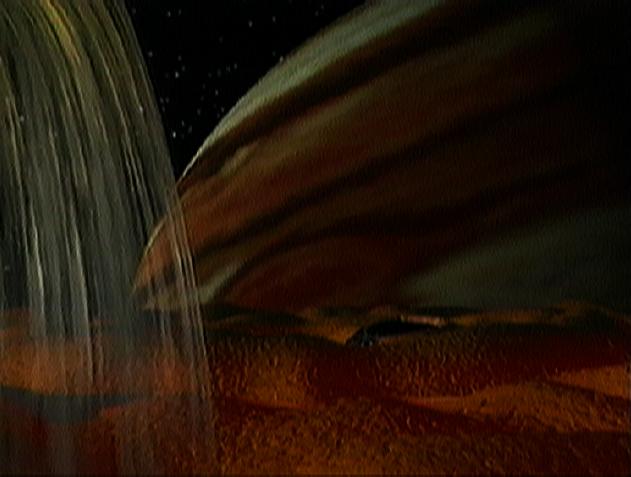
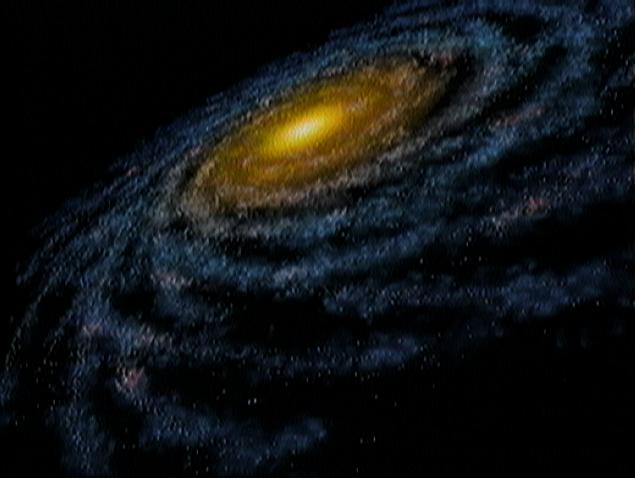
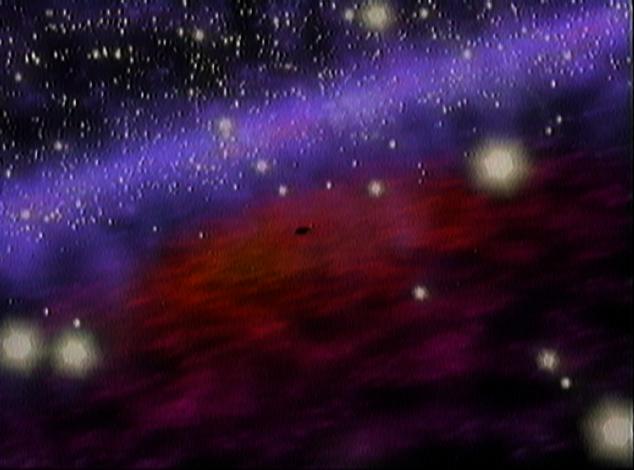
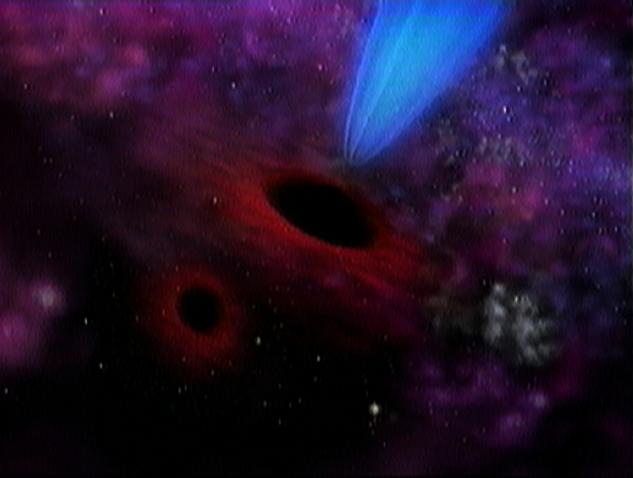
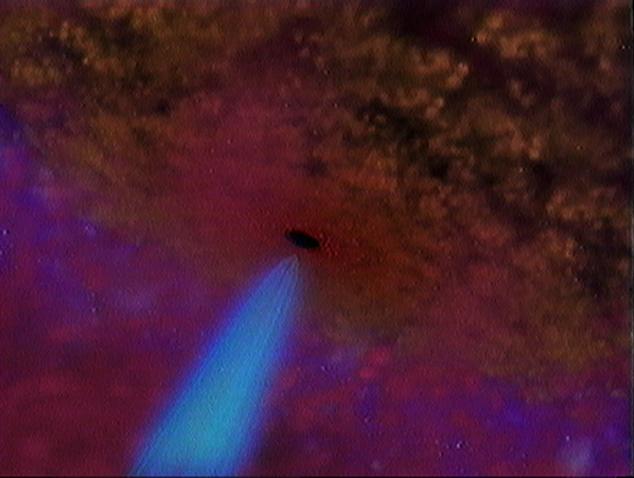
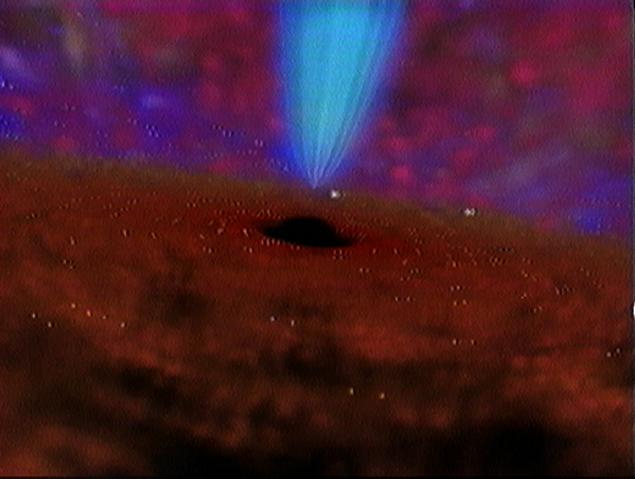
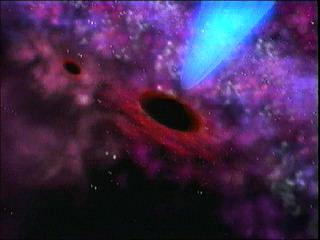
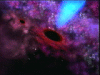
Among the twenty-five shots produced for the series were simulations of
black hales, quasars, red giants, solar system evolution, interacting
galaxies and planetary fly-bys through our solar system. Series Producer
Peter Baker remarked, "I think "THE ASTRONOMERS" happily stretched the
CGI companies we worked with to new realms. We needed realistic depiction
of things that are diffuse and selfluminous. We needed beauty coupled with
scientific accuracy. We needed to visualize the invisible. The people we
worked with developed great new techniques...they demonstrated a perfect
marriage of artistry and technical wizardry."
Scheduled to be broadcast starting April 15th, 1991, and running for six
consecutive weeks, "THE ASTRONOMERS" promises to provide an up-to-date tour
of modern astronomy and today's most intriguing cosmic mysteries.
Some more Comments :
second INA Pixel Prize
information from a fax sent by Kleiser-Walczak
|